What Are the Applications of Sugarcane Bagasse?
Sugarcane bagasse is the fibrous residue left after sugarcane is crushed to extract its juice. It can be used as a valuable biomass resource instead of being treated as waste.
However, fresh bagasse usually contains a high amount of moisture. Excess moisture can make storage and transportation more difficult, reduce combustion efficiency and affect further processing. Therefore, drying is often an important step before reuse.

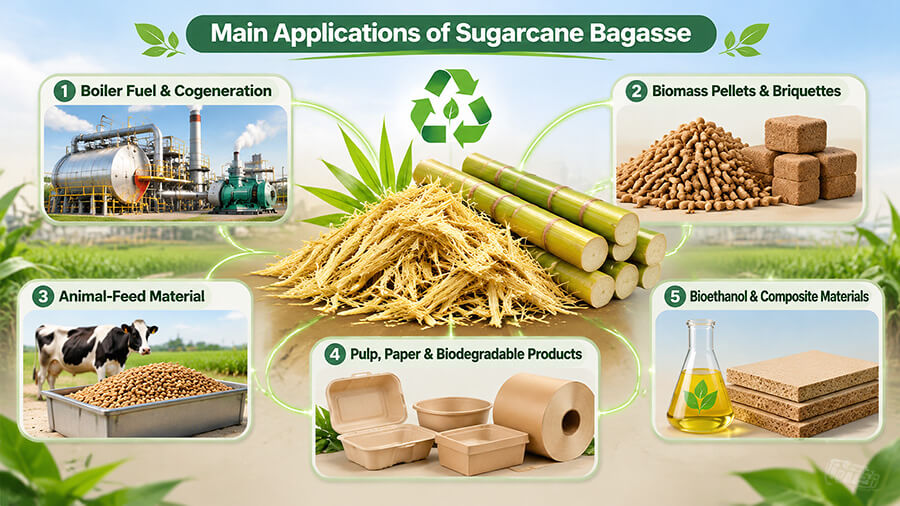
Main Applications of Sugarcane Bagasse
1. Boiler Fuel and Cogeneration
Bagasse is widely used as fuel in sugar mills. After suitable moisture reduction, it can be burned in boilers to produce steam and electricity. The required moisture level depends on the boiler design and operating conditions.
2. Biomass Pellets and Briquettes
Dried bagasse can be processed into pellets or briquettes for easier storage, transportation and use as solid fuel. A typical process includes dewatering, drying, screening or crushing, pelletizing and cooling.
3. Animal-Feed Material
After suitable pretreatment, bagasse may be used as a fibrous material in selected animal-feed formulations. However, drying alone does not make all bagasse suitable for direct feeding. Composition, digestibility, cleanliness and local feed regulations must be evaluated first.
4. Pulp, Paper and Biodegradable Products
Bagasse fibers can be processed into pulp, paper, molded food-service products and other fiber-based materials. The final product quality depends not only on drying, but also on pulping, forming and quality-control processes.
5. Bioethanol and Composite Materials
The cellulose and hemicellulose in bagasse can be further processed through pretreatment, hydrolysis and fermentation. Bagasse fibers can also be used in selected boards and composite materials. The suitable process depends on the final product and production technology.
Why Is Bagasse Drying Important?
Drying can help to
~ Improve storage stability;
~ Reduce the amount of water transported;
~ Improve feeding and downstream processing;
~ Support more consistent combustion or pelletizing;
~ Make better use of suitable waste heat or other heat sources.
The correct drying target depends on the final application. A boiler, pellet line, feed process and pulp line may require different conditions.
Bagasse Drying Process
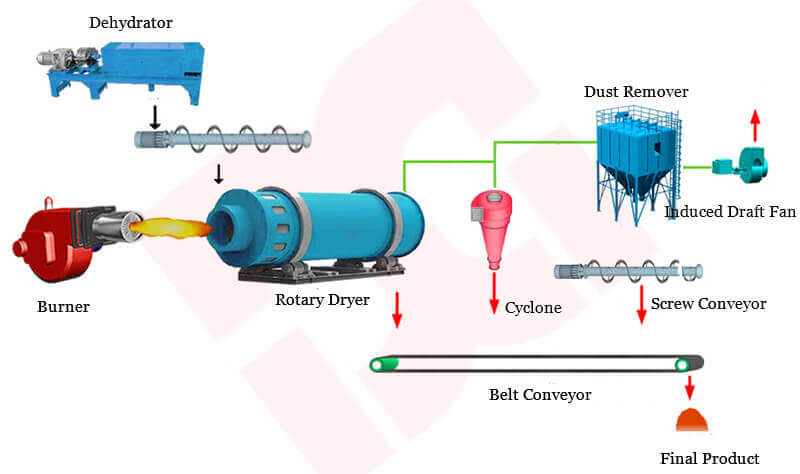
A complete drying system may include:
1. Feeding and material preparation;
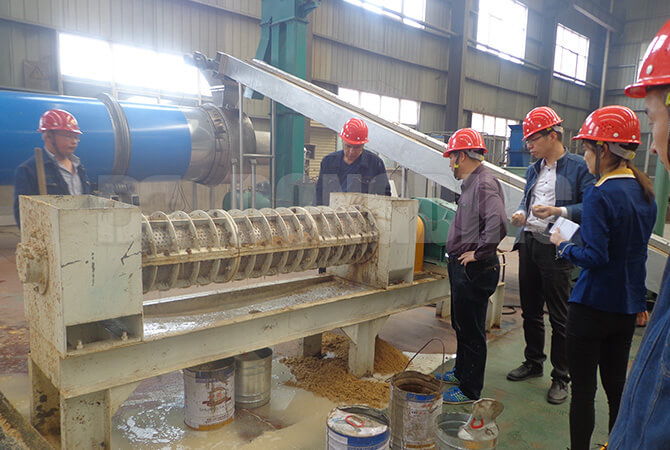
2. Mechanical dewatering, when required;
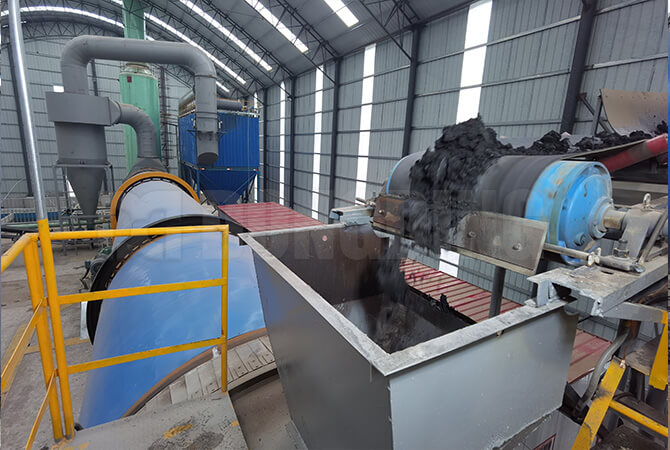
3. Hot-air drying and material dispersion;
4. Dust separation and emission control;
5. Discharge to storage or the next processing stage.

Dongding provides customized bagasse drying systems according to the material characteristics, capacity, moisture requirements and downstream process. The system may include a dewatering machine, hot-air furnace, bagasse dryer, dust collector, induced-draft fan, conveyor and electrical control system.
Learn more about the bagasse dryer solution or the biomass dryer.